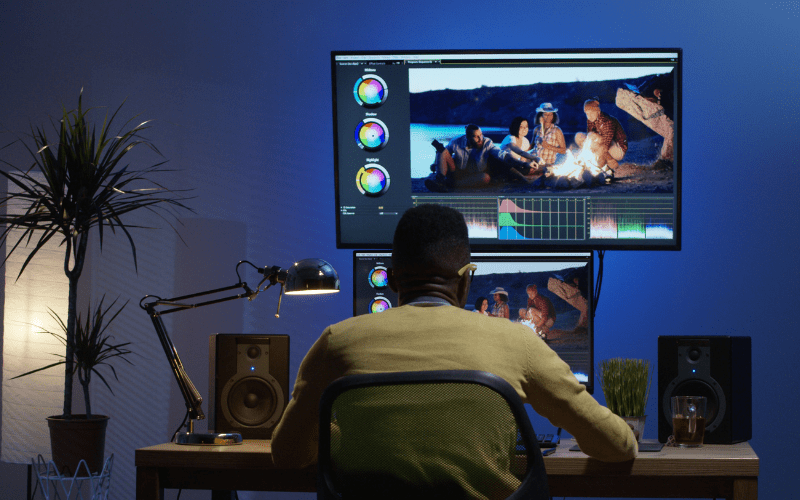
Video editing courses are designed to teach individuals the skills and techniques needed to edit and produce high-quality videos for various purposes, including film, television, online content, marketing, and more. Here are the key details you can expect from video editing courses:
- Course Content:
- Video Editing Software: Courses typically cover popular video editing software like Adobe Premiere Pro, Final Cut Pro, DaVinci Resolve, and others.
- Editing Techniques: You’ll learn fundamental and advanced video editing techniques, such as cutting, trimming, transitions, color correction, audio editing, and special effects.
- Storytelling: Video editing is not just about cutting clips; it’s about storytelling. Courses often cover narrative structure, pacing, and how to effectively convey a message or story through editing.
- Multimedia Integration: Many courses cover the integration of graphics, animations, music, and sound effects into video projects.
- Color Grading: Courses often teach color correction and grading techniques to enhance the visual appeal of videos.
- Workflow and Organization: You’ll learn how to organize and manage video assets efficiently.
- Project Collaboration: Some courses cover working in a collaborative video production environment.
- Course Levels:
- Beginner: Courses designed for those new to video editing.
- Intermediate: Targeted at individuals with some basic video editing experience looking to improve their skills.
- Advanced: Advanced courses cover complex techniques and are suitable for experienced video editors.
- Duration: The duration of video editing courses can vary significantly. Some are short workshops or tutorials, while others may be full-fledged semester-long programs or even multi-year degrees.
- Format:
- Online Courses: Many video editing courses are available online through various e-learning platforms.
- In-Person Classes: Some institutions offer in-person classes and workshops for video editing.
- Certification Programs: Certain courses provide certification upon completion.
- Instructor/Provider: Video editing courses can be offered by universities, film schools, online learning platforms, professional editors, or dedicated video editing training organizations. Choose a reputable source for your training.
- Prerequisites: Check if there are any prerequisites for the course, such as basic computer skills or familiarity with video editing software.
- Cost: The cost of video editing courses can vary widely, from free online tutorials to expensive degree programs. Consider your budget and the value you expect to gain from the course.
- Software and Equipment: Some courses may require you to have access to specific video editing software or hardware. Ensure you have the necessary tools or access to them.
- Projects and Portfolio Building: Look for courses that provide opportunities to work on real projects or build a portfolio. Practical experience is essential for mastering video editing.
- Certification: Some courses offer certification upon completion, which can be beneficial for demonstrating your video editing skills to potential employers or clients.
- Job Opportunities and Networking: Certain courses may offer job placement assistance or opportunities to network with professionals in the field.
When selecting a video editing course, consider your current skill level, your specific editing interests (e.g., film, commercials, YouTube content), the software you want to learn, and your preferred learning format. Research various courses, read reviews, and consider seeking recommendations from professionals in the industry to choose a course that aligns with your career goals and expectations.
Course Features
- Lecture 0
- Quiz 0
- Duration 60 hours
- Skill level All levels
- Language English
- Students 32
- Assessments Yes